E911 for US offices: what Kari's Law and RAY BAUM's Act require
Two federal laws decide what happens when someone in your office or hotel dials 911: direct dialing with no prefix, an alert to the front desk, and a dispatchable location for the dispatcher. Here is what each requires and how to set it up.
In December 2013, Kari Hunt was attacked in a motel room in Marshall, Texas. Her nine-year-old daughter picked up the room phone and dialed 911 four times. The call never connected, because the motel phone system needed a 9 first for an outside line. Nobody had taught a nine-year-old that.
That call is the reason for two federal laws that now apply to almost every business phone system in the United States: Kari's Law and Section 506 of RAY BAUM's Act. Together they cover what happens when someone in your office, hotel, clinic or warehouse dials 911. They apply to the phone system you buy or lease and to whoever installs and runs it.
This guide explains what the two laws require in plain English, who has to comply, and how to set each requirement up in Filantis on the Emergency Services page.
Who these laws apply to
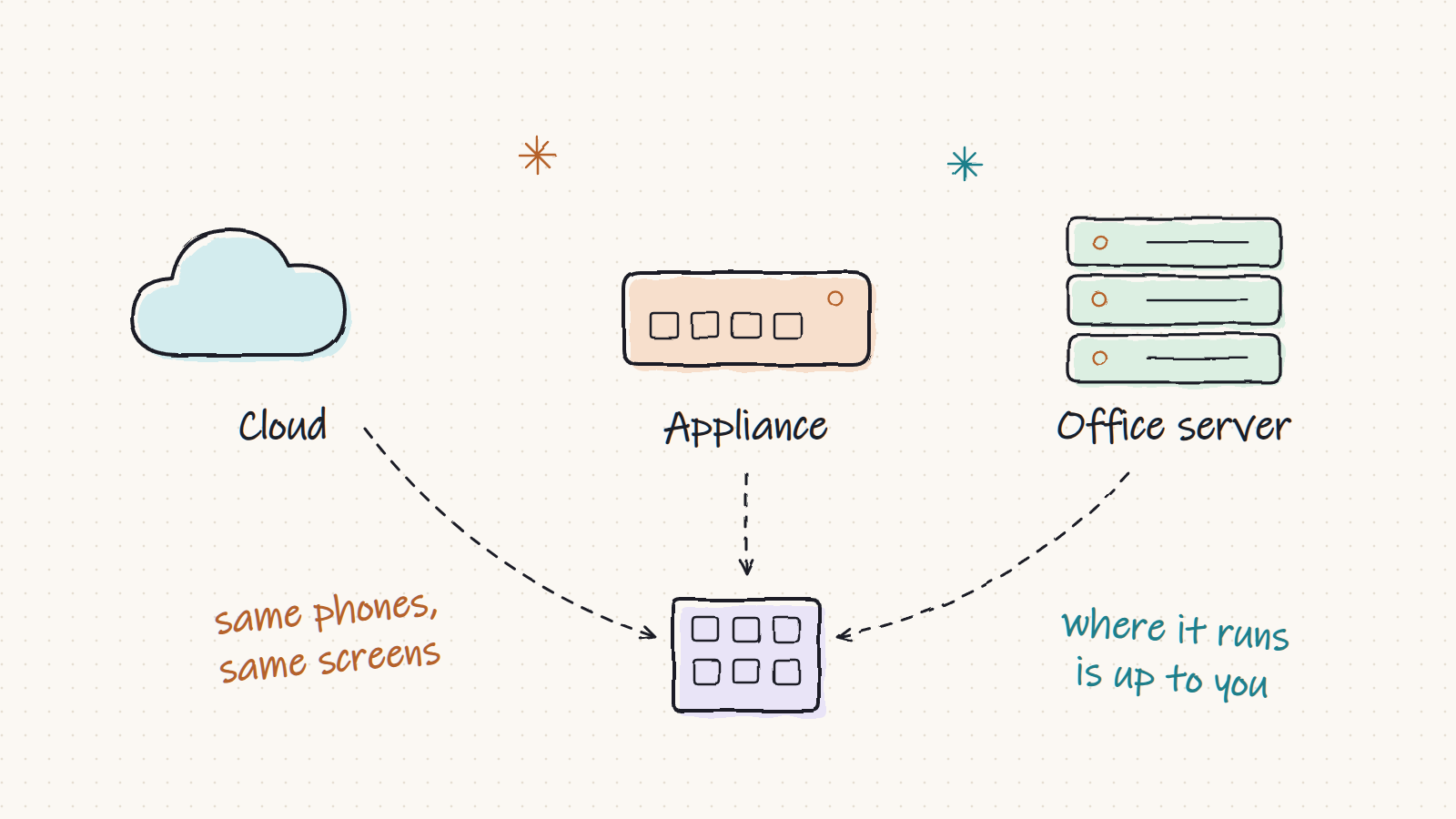
Both laws are about multi-line telephone systems, or MLTS. That is the FCC's term for any phone system that serves several phones behind shared outside lines: a traditional PBX, a hosted or cloud phone system, a VoIP phone system on a server in your back office, or a hotel's room phones.
If your business has extensions, you almost certainly have an MLTS. The rules reach three groups:
- Manufacturers, importers, sellers and lessors of the system, who must ship it able to dial 911 directly.
- Installers, who must set it up that way.
- Managers and operators, meaning the business running the phones day to day, who must keep it that way.
Kari's Law covers systems made, sold, leased or installed after February 16, 2020. The RAY BAUM's Act location rules took effect for fixed phones on January 6, 2021, and for phones that move around (softphones, mobile apps, devices that change desks) on January 6, 2022. Several states had their own MLTS 911 laws before these, and some ask for more, so check your state's rules too.
Requirement 1: dial 911 directly, with no prefix
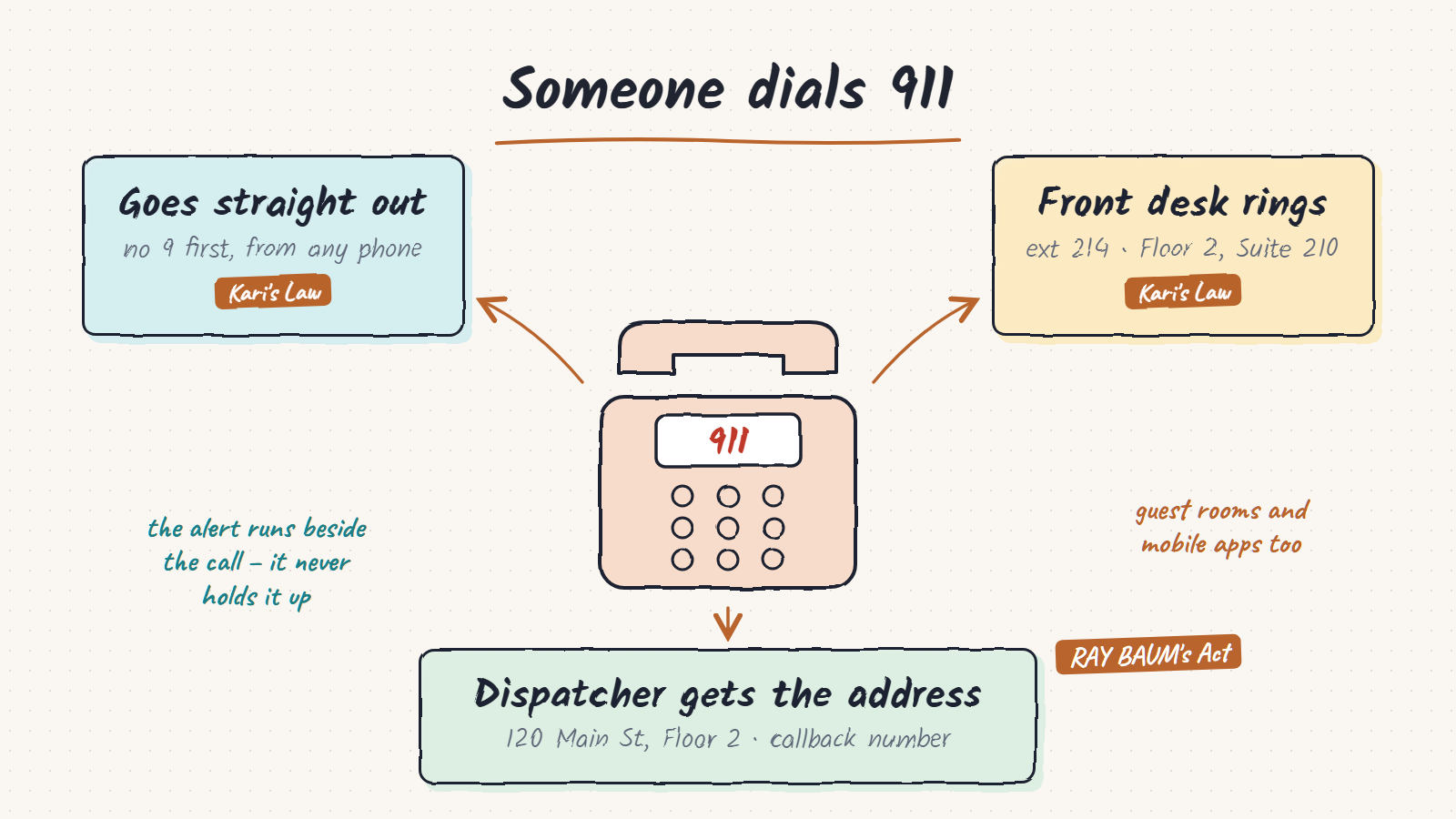
Under Kari's Law, anyone at any phone on the system must be able to reach 911 by dialing just 9-1-1. No outside-line digit, no access code, no PIN and no extra digits after it.
Two details catch businesses out:
- Restricted phones count. A lobby courtesy phone, a guest room with outside calls switched off, or a staff extension blocked from long distance must still reach 911.
- Old habits must keep working. People who are used to dialing 9 for an outside line will dial 9-911 in a panic. That should connect too.
Requirement 2: tell someone on site that 911 was called
The second half of Kari's Law is the notification rule. When someone dials 911, the system must also alert a central point where someone is likely to see or hear it: a front desk, a security office or a switchboard. Responders arriving at a large building lose minutes finding the right floor, and the person at the desk can meet them at the door, unlock the stairwell or hold the elevator.
The FCC expects the alert to say that a 911 call was made, give a callback number, and say where the caller is as far as the system knows. The law requires notification wherever the system can do it without new hardware or software, and the alert must never delay the 911 call itself.
Requirement 3: send a dispatchable location
RAY BAUM's Act deals with what the 911 dispatcher sees. Every 911 call from a business phone system must carry a dispatchable location: a validated street address plus whatever else is needed to find the caller, such as the floor, suite or room number.
A company with one small office on one floor may need only its street address. A ten-story building, a campus or a hotel needs more: "120 Main Street" tells an ambulance crew where to park, not which of 300 rooms to run to.
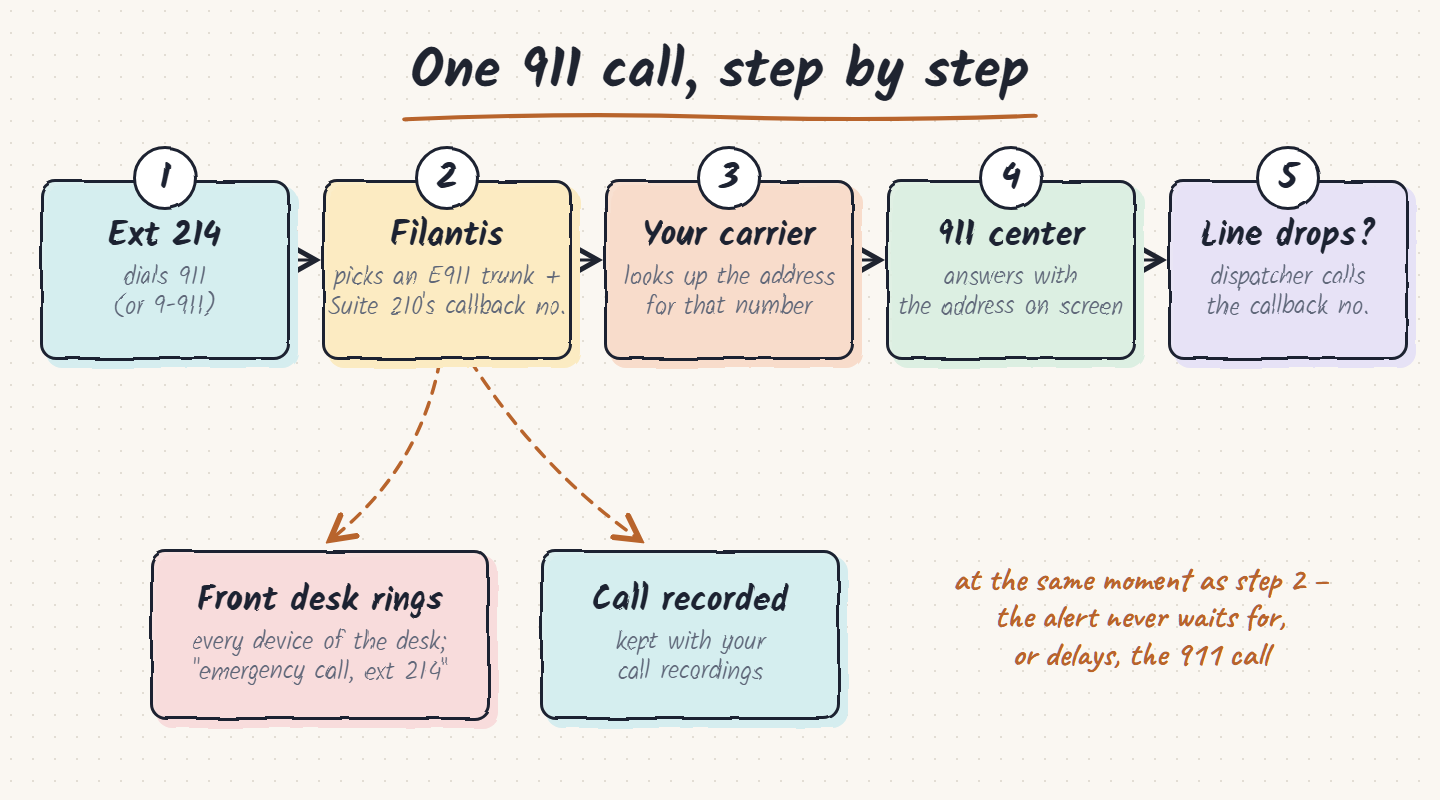
In practice, most VoIP systems send the location through the carrier. Your SIP trunk provider registers each E911 callback number (also called an ECBN) against a street address in the national 911 database. When a call arrives from that number, the 911 center sees the address on screen. If the line drops, the dispatcher calls that number back. So getting dispatchable location right comes down to two things: the right callback numbers registered at the right addresses, and a phone system that sends the right one for each caller.
How Filantis handles each requirement
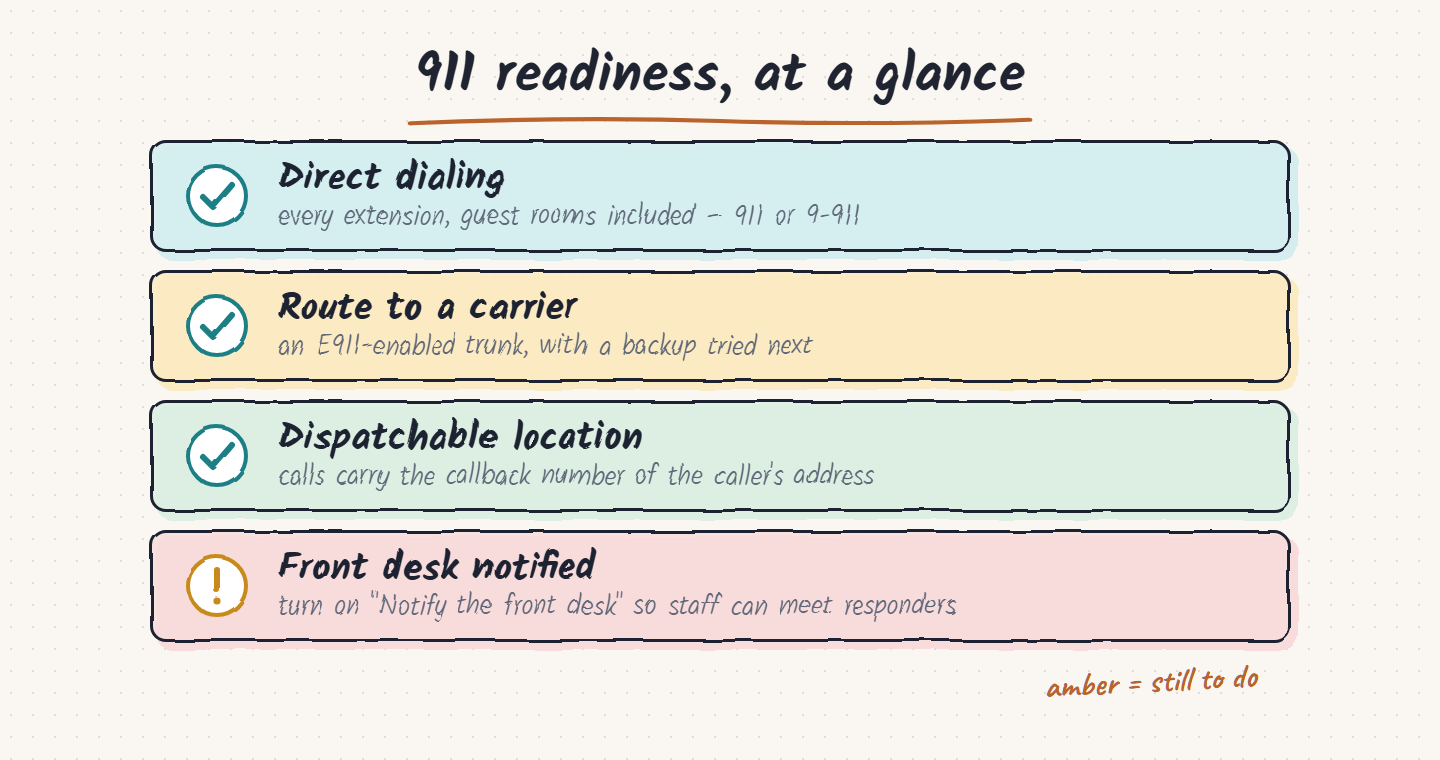
Everything lives on one page in the admin console, Call Control → Emergency Services. At the top, a 911 readiness card checks your setup against both laws and turns each item green once it is done.
| What the law asks | Law | What Filantis does |
|---|---|---|
| Dial 911 with no prefix | Kari's Law | Every extension reaches 911 directly, whatever its calling restrictions. 9-911 works too. |
| Alert a central point | Kari's Law | Rings the front desk extension on all its devices and reads out the caller's extension and location. |
| Send a dispatchable location | RAY BAUM's Act | Each extension is tied to a location; the call leaves with that location's registered callback number. |
| Never delay the 911 call | Both | The alert and recording run alongside the call, never before it. |
Direct dialing, already done
Add 911 as an emergency service number and every phone can call it: desk phones, the mobile app, softphones and guest room phones. Emergency numbers ignore outbound restrictions, so a phone that cannot make any other outside call still reaches 911. Filantis also adds your outside-line digit automatically, so 9-911 connects instantly without waiting for more digits. There is nothing to switch on here, and nothing an administrator can accidentally switch off.
Routing to a carrier that handles E911
Pick which SIP trunks emergency calls use, in order. Use trunks your carrier has enabled for E911. If the first fails, the next is tried. If no trunk answers at all, the caller is put through to the front desk rather than left listening to silence.
Dispatchable locations, down to the room
Under Dispatchable locations, add each address you operate from: name, street address, city, state, ZIP and the E911 callback number your carrier has registered for that exact address. Mark one as the default.
Then, in Where each extension is, choose a location for any extension that is not at the default address and type the floor, room or suite responders should go to, for example "Floor 2, Suite 210". In a hotel, guest rooms fill this in on their own from your floor plan ("Room 412, Floor 4"), so there is no list of 200 rooms to type.
When someone dials 911, the call leaves with the callback number of the caller's location, and your carrier delivers the street address registered against it.
Tip for multi-floor buildings: if responders need to know the floor, not just the building, ask your carrier for one callback number per floor or wing. Register each with the floor in the address, then add each as its own location in Filantis. The floor then reaches the 911 center itself, not only your front desk.
The front desk alert
Turn on Notify the front desk and choose the extension that should hear about it: reception, a security desk, or the duty manager. When anyone dials 911:
- every device on that extension rings at once (desk phone, mobile app and softphone);
- the call shows the caller's room or floor on screen;
- a voice reads out which extension dialed 911.
The alert starts at the same moment as the 911 call and runs separately from it, so it can never hold up the emergency call. The person at the desk knows within seconds where to send responders.
Recording emergency calls
Turn on Record emergency calls and every 911 call is recorded whatever your usual recording settings are. Recordings sit with your other call recordings, which helps with incident reviews and insurance claims. Check your state's rules on recording calls before you turn it on.
A setup checklist for US businesses
- Ask your SIP trunk provider about E911. Confirm the trunk supports it and get a callback number registered at each address, or each floor, you need.
- Add your locations in Filantis with those callback numbers, and set a default.
- Place every extension that is not at the default address, and add floor or suite details where they help.
- Add 911 as an emergency service, choose your E911 trunks in order, and turn on Send dispatchable location.
- Turn on the front desk alert and pick an extension that is always staffed, or one that rings a manager's mobile app after hours.
- Test without dialing 911. Many carriers offer a test number, such as 933, that reads back the address registered for your callback number. Never place a test call to 911 without arranging it with your local 911 center first.
- Review after every move. New office, new floor or staff working from home: update the location and register the new address with your carrier before the move, not after.
Common questions
Does Kari's Law apply to my small office?
If your phones share outside lines through a phone system, yes. There is no exemption based on company size. A five-person office on a cloud phone system is an MLTS just as a hotel is.
What about remote and work-from-home staff?
RAY BAUM's Act expects a location for phones used away from the office too, where that is technically feasible. In Filantis, add the employee's home as a location with a callback number your carrier has registered there, and put their extension on it. Remind staff to update it when they work somewhere else.
Our system was installed before 2020. Are we exempt?
Kari's Law applies to systems made, sold, leased or installed after February 16, 2020. Older systems that have not been replaced or reinstalled may fall outside it, but state laws can still apply, and every new installation, upgrade or move to a new system brings you under the federal rules. Direct 911 dialing is also cheap to get right and costly to get wrong.
What happens if we don't comply?
The FCC can fine companies that make, sell, install or operate non-compliant systems. The bigger risk is the one the laws were written for: a call that does not connect, or a responder who cannot find the caller.
Does this apply outside the US?
Kari's Law and RAY BAUM's Act are US federal law. The same Emergency Services page works for 112, 999 or any local emergency number, with the same direct dialing, front desk alert and recording.
Filantis brings the phone system, staff extensions and front-desk tools for offices and hotels together in one place. If you are setting up a new office or replacing an old PBX, you can have 911 handled properly from the first day.
This article explains the general requirements of federal law and is not legal advice. For your specific situation, talk to your carrier and a qualified advisor.