Taking phone orders without losing the kitchen
A ringing phone at 8 pm takes someone off the floor. Here is how a restaurant order line turns a call into a kitchen ticket without shouting across the pass.
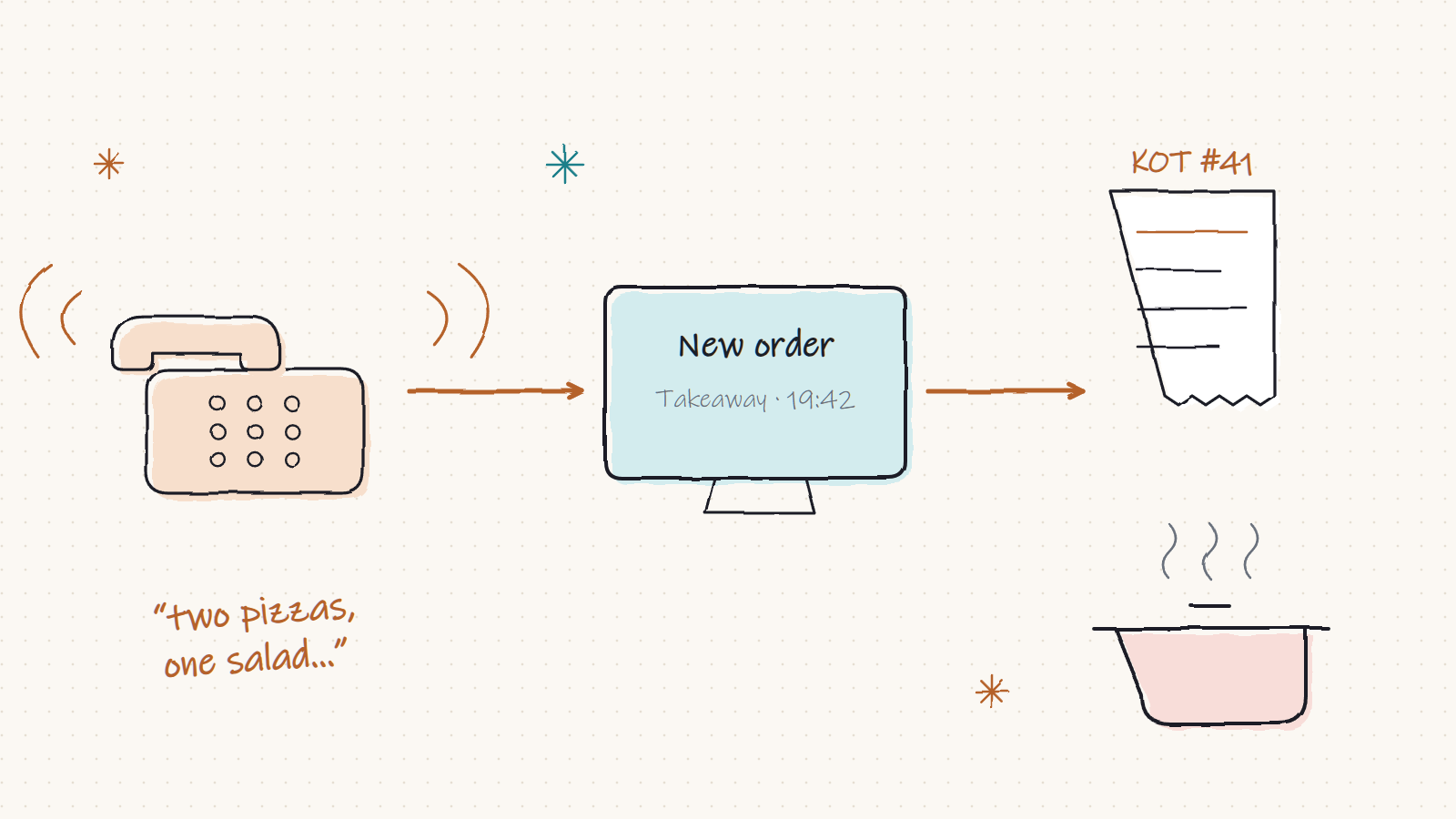
At eight on a Friday the phone rings. Whoever is closest picks it up, tucks it under one ear, finds a pen, writes "2 pizzas, 1 salad, no onions" on the back of a receipt and walks it to the kitchen. In those ninety seconds a table waited for its bill, and the note may or may not survive the trip.
Phone orders are good business. The usual way of taking them is what hurts. This post follows one call through a restaurant phone system where the phone and the order screen are the same tool.
Where a phone order goes wrong
- Nobody hears it. The phone is at the counter and the staff are on the floor.
- The order is written twice. Once on paper, then again into the till, with a chance of a mistake each time.
- The kitchen hears it last. The ticket only exists when someone walks it in.
- There is no trail. When the customer says "I ordered two", there is nothing to check.
One call, one screen
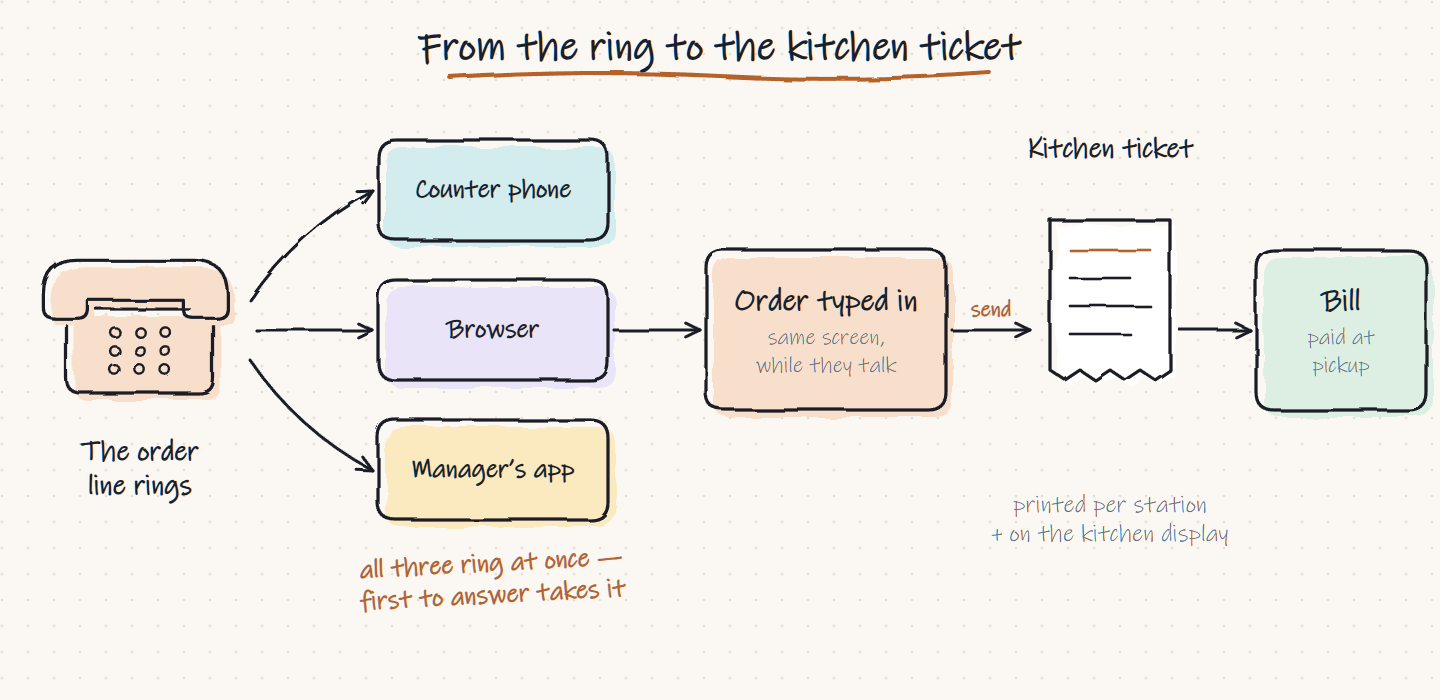
With Filantis the takeaway line is a ring group. It rings the counter phone, the browser at the till and the manager's mobile app at the same time, and the first person free answers. Nobody has to run to the counter.
That person starts the order on the screen in front of them: takeaway, delivery, dine-in or room service all begin on the same page. Dishes carry their modifiers, such as spice level or a half portion, so "no onions" is a tap and not a scribble. If a dish has sold out, the whole floor sees it at once and nobody promises it to a caller.
The kitchen sees it immediately
Sending the order creates the kitchen ticket. Each station gets its own, printed and shown on the kitchen display with a timer running. When the kitchen marks it ready, the floor sees it at once. Nobody walks a slip of paper anywhere, and nobody shouts across the pass. For that, there is the intercom: staff can page the kitchen through the handsets.
The best phone order is typed once, by the person who heard it, while the customer is still on the line.
After the rush
Because the order went through the same system as every table, the bill, the payment and the takings land in the same place: the cashier's till and your accounts. If you give dishes recipes, each ticket also takes its ingredients out of stock, so the food cost in your reports is the one you really had. Stock tracking is optional and you can switch it on later.
Outside opening hours the line should not ring an empty room. Set your hours once and callers hear when you open instead. A short greeting helps here too.
Starting small
You do not need new hardware to try this. One SIP phone at the counter, a browser at the till and the app on the manager's phone are enough. Keep your existing number by pointing its SIP trunk at the system. The restaurant pack works alone or beside the hotel module, where a bill can be charged to a guest's room.
The pricing page shows the restaurant pack, and you can start on the free plan to see the order screen before you move a single phone.