The wake-up call that never gets missed
Why paper wake-up lists fail at shift change, and how an automatic wake-up call rings the room, tries again and tells the front desk when nobody answers.
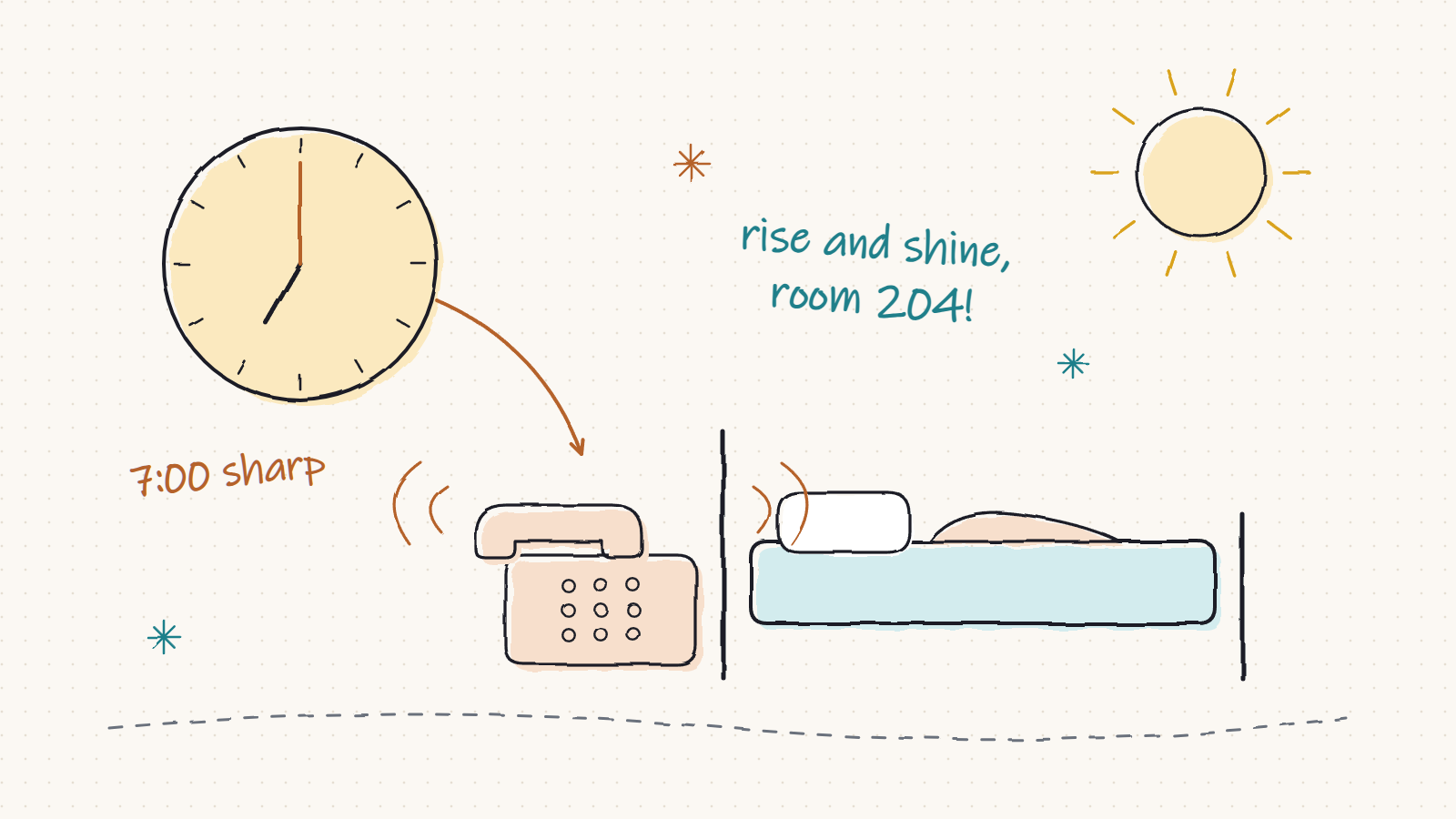
A guest who asks for a 6:30 wake-up call is trusting the front desk with a flight, a meeting or a wedding. Most hotels still keep that promise on a sheet of paper next to the reception phone. It works on a quiet night. It fails on the night it matters, and the hotel finds out from a review.
This post looks at why the paper list breaks, and what changes when the hotel phone system places the wake-up call itself.
Why the paper list fails
Nobody decides to skip a wake-up call. The list fails for ordinary reasons:
- Shift change. The night clerk writes the call down and the morning clerk never sees the sheet.
- One line, several calls. Five guests ask for 6:30. One person dials five rooms, and the last room is called at 6:41.
- No answer is nobody's job. The phone rings out, the clerk moves to the next room and the first guest sleeps on.
- No record. When the guest says "nobody called me", the hotel cannot show that it did.
What an automatic wake-up call does
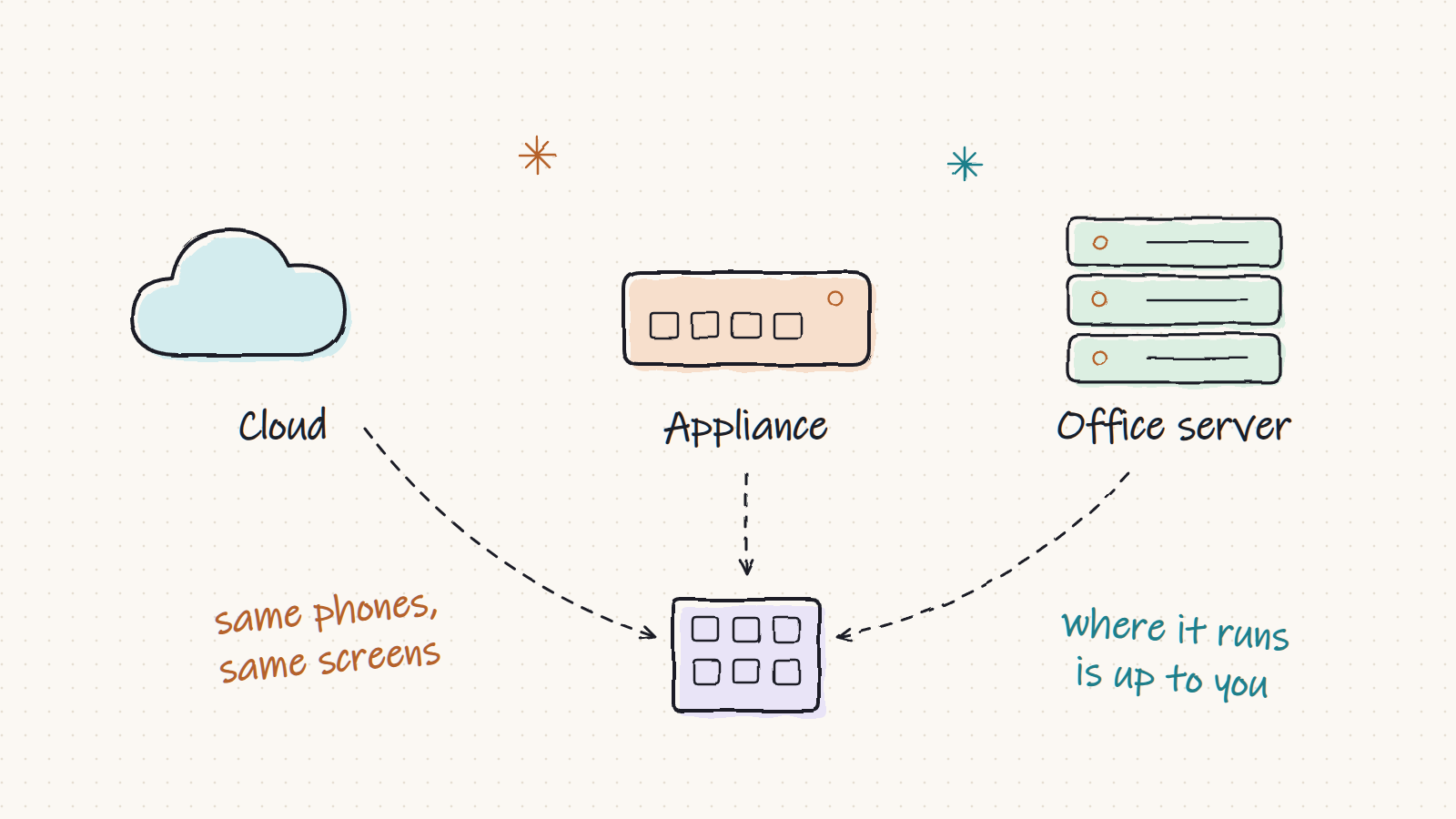
When the room phones are extensions on the hotel's own business phone system, the system can place the call. The clerk's job changes from making the call to watching a board.
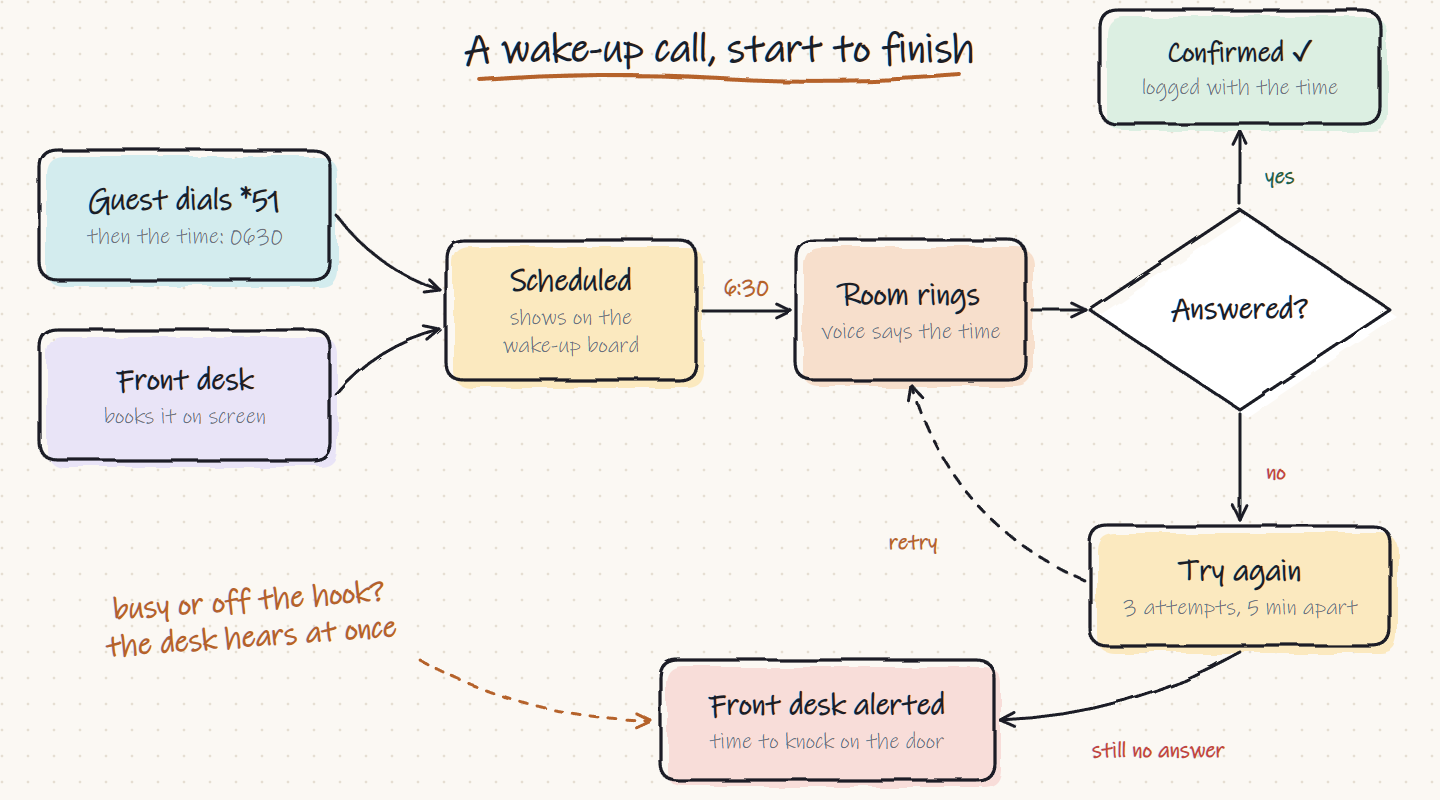
In Filantis the flow works like this:
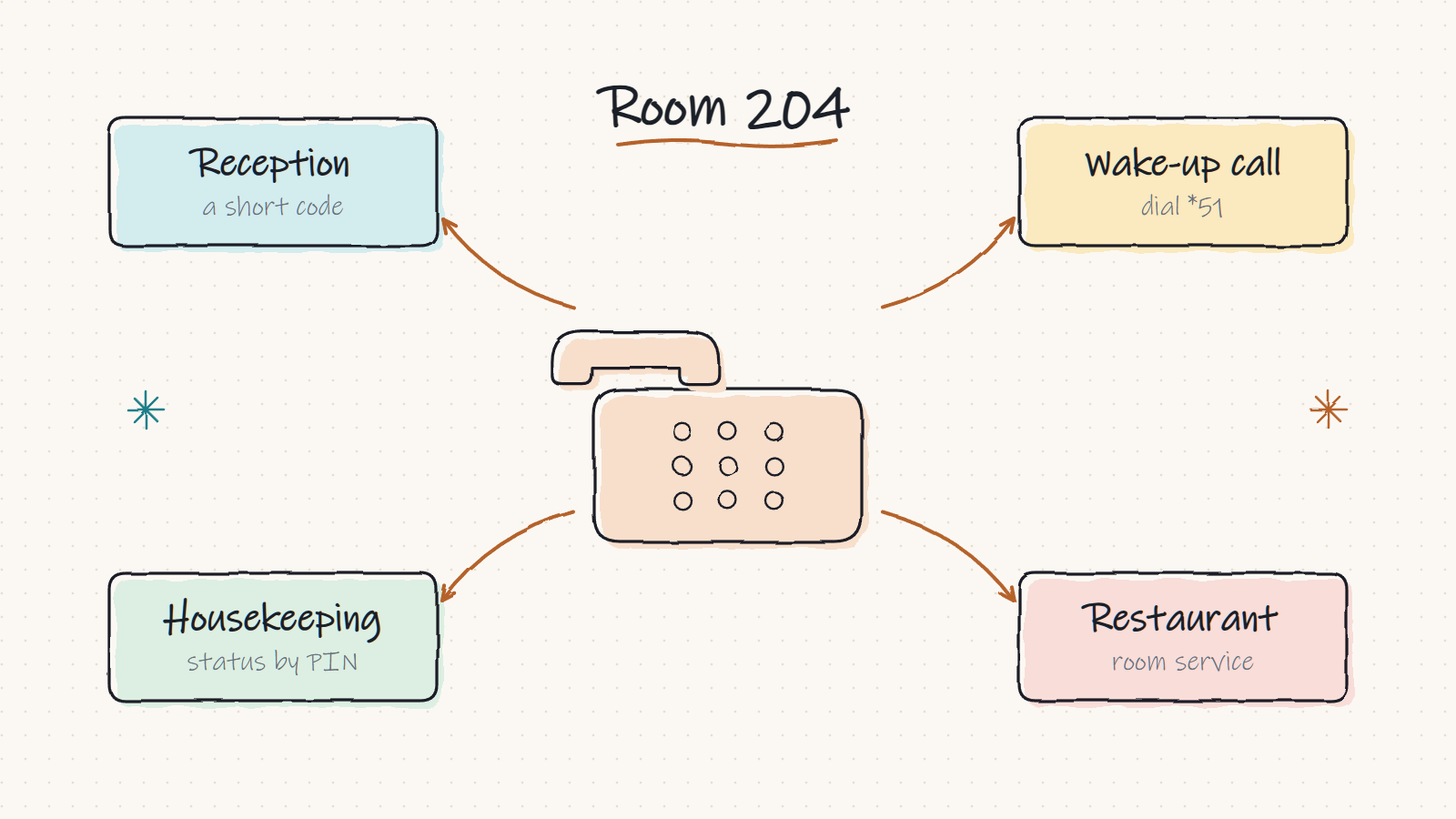
- Booking the call. The guest dials *51 on the room phone and types the time as four digits, for example 0630. The system reads the time back, so a slip of the finger is caught the night before. Dialling *52 cancels it. The front desk can also book the call from its screen.
- The board. Every call that is due appears on the wake-up board by room number only, never by guest name, so the board can sit on a screen behind the desk.
- The call. At the set time the room rings and a voice says the time.
- No answer. The system tries again. Out of the box it makes three attempts, five minutes apart, and a hotel can change both numbers.
- Telling a person. If every attempt goes unanswered, the room is flagged to the front desk while there is still time to knock on the door. A phone that is busy or off the hook is flagged at once instead of after three tries.
The guest never knows the call was automatic. They only know it came.
What the front desk gains
The clerk no longer dials rooms at the busiest time of the morning, when the same desk is handling early check-outs and airport taxis. Each call is recorded with the time it was answered, which settles a dispute in one look. And because guests can set their own call from the room, fewer requests reach the desk at midnight.
The same room phone does more than wake people up. Our post on what a hotel room phone can do besides ring covers housekeeping status, outside lines and room-to-room calls.
What you need to start
- Room phones on the system. Any standard IP desk phone works, and existing analogue room phones can stay if they are plugged into a small adapter box.
- The hotel pack. Wake-up calls, the room board and housekeeping are part of the hotel module. The pricing page shows which plan includes it.
- A screen at the desk. Any browser will do.
A small guest house and a 200-room property use the same software. If you want to see it with your own rooms, create a free workspace and lay out one floor.